The sea, the coast and a steadier picture
I reconstructed the creatures of the open sea, set how a BAGDEV arrives and lands, and steadied the picture on weak platforms. The topics follow in the order the operator meets them.
Creatures of the sea
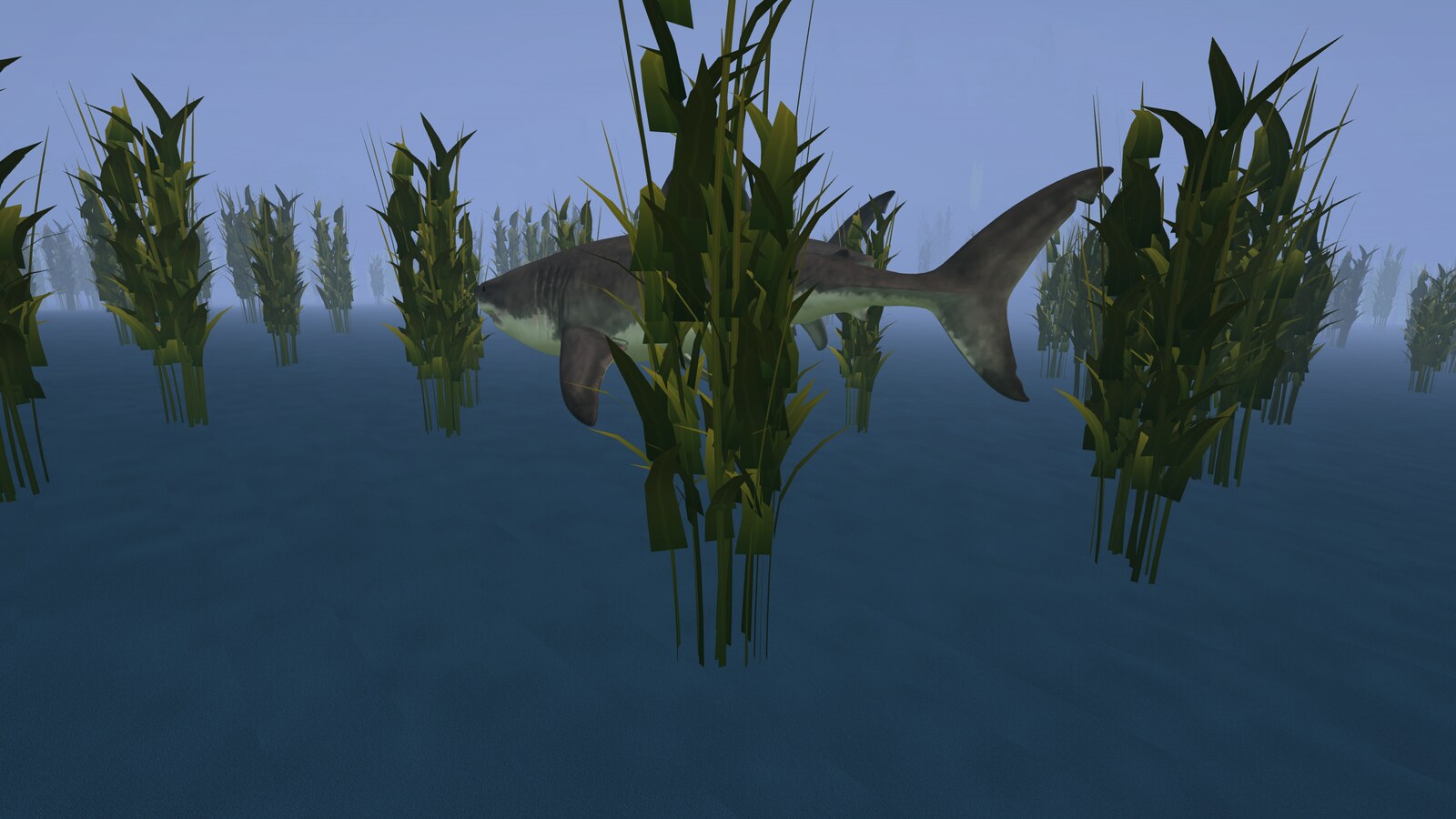
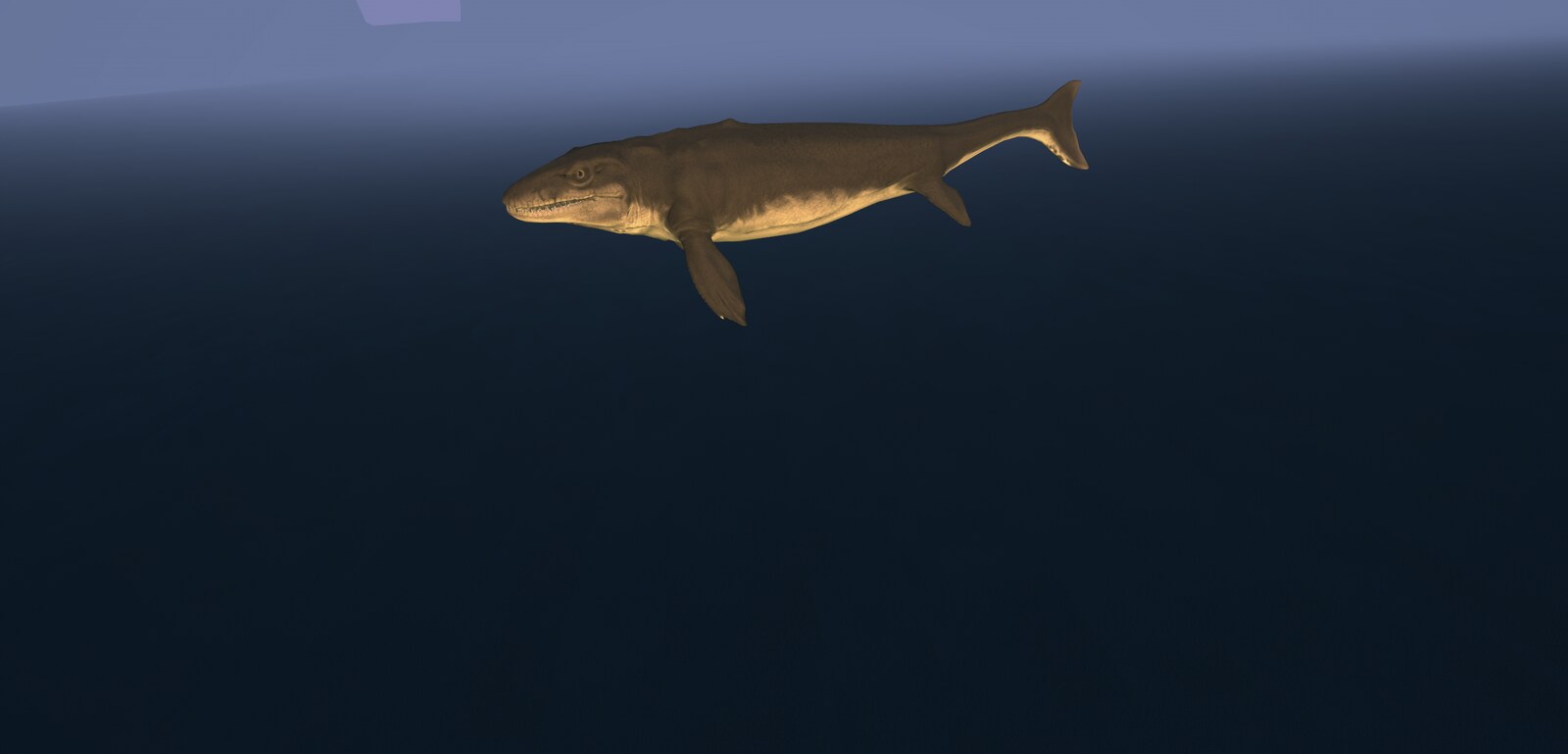
Two large animals live in the open water now. A Mosasaurus of 15 m and a Megalodon move through the water column the way a flyer moves through the air: they swim, turn and dive, and they do not stand on the sea floor. They live in deep water, away from the coast. Hold the dive key to go down to them.
Patterns
I scan the animals more closely now, so I can show their real markings as they are on the planet. The pattern of each species is readable, and two animals of one species differ in detail. The Stegosaurus shows it from a distance: larger spots, a clearer accent and a dorsal stripe.
Hungry creatures
Wild and tamed creatures grow hungry by the same rule. A sleeping companion feeds from its tribe's troughs and from its saddle. One that has run empty walks to the nearest trough that holds its food, forages like a desperate wild creature when there is none, and breaks out of a pen it is shut in.
Colonies
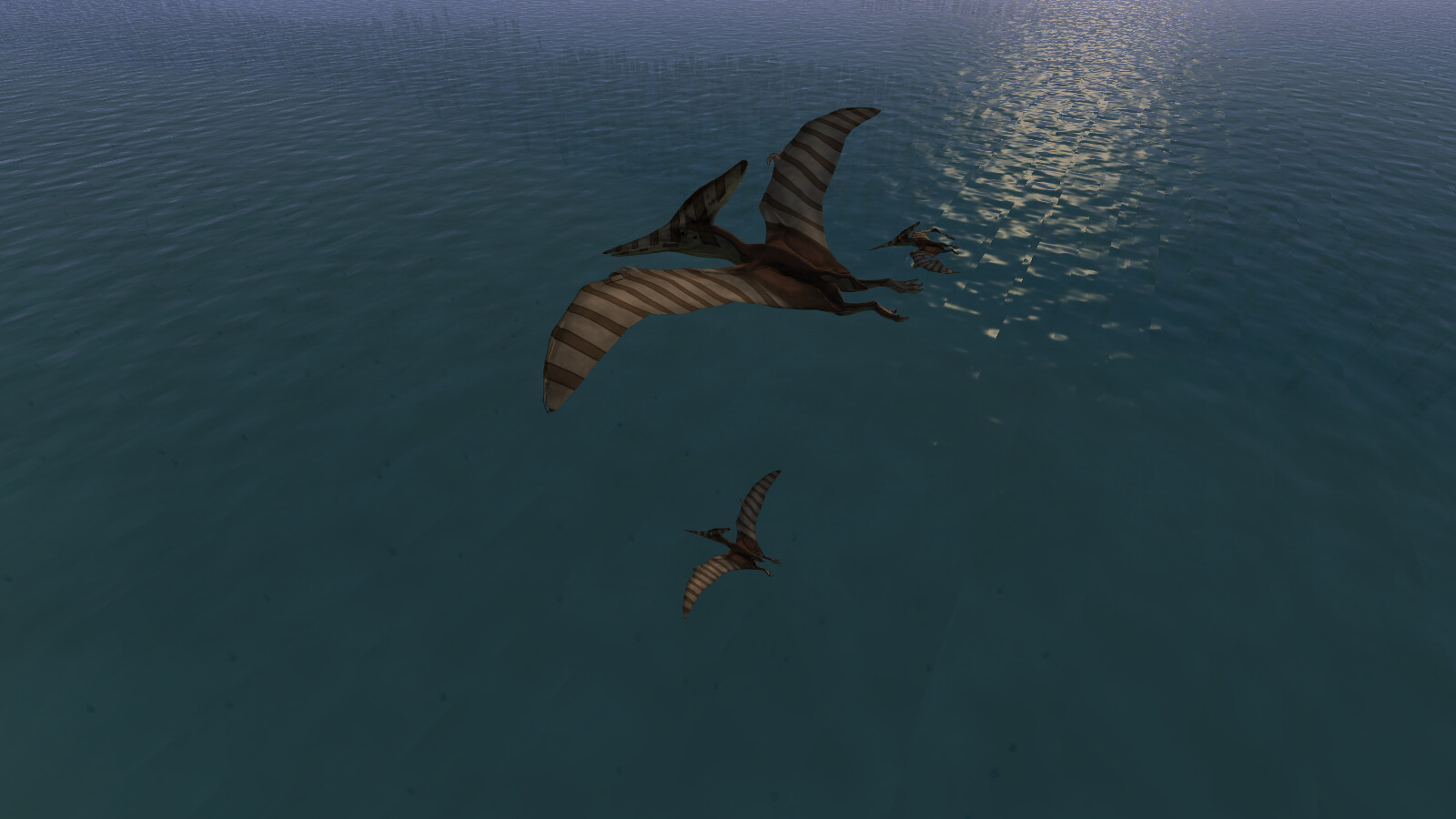
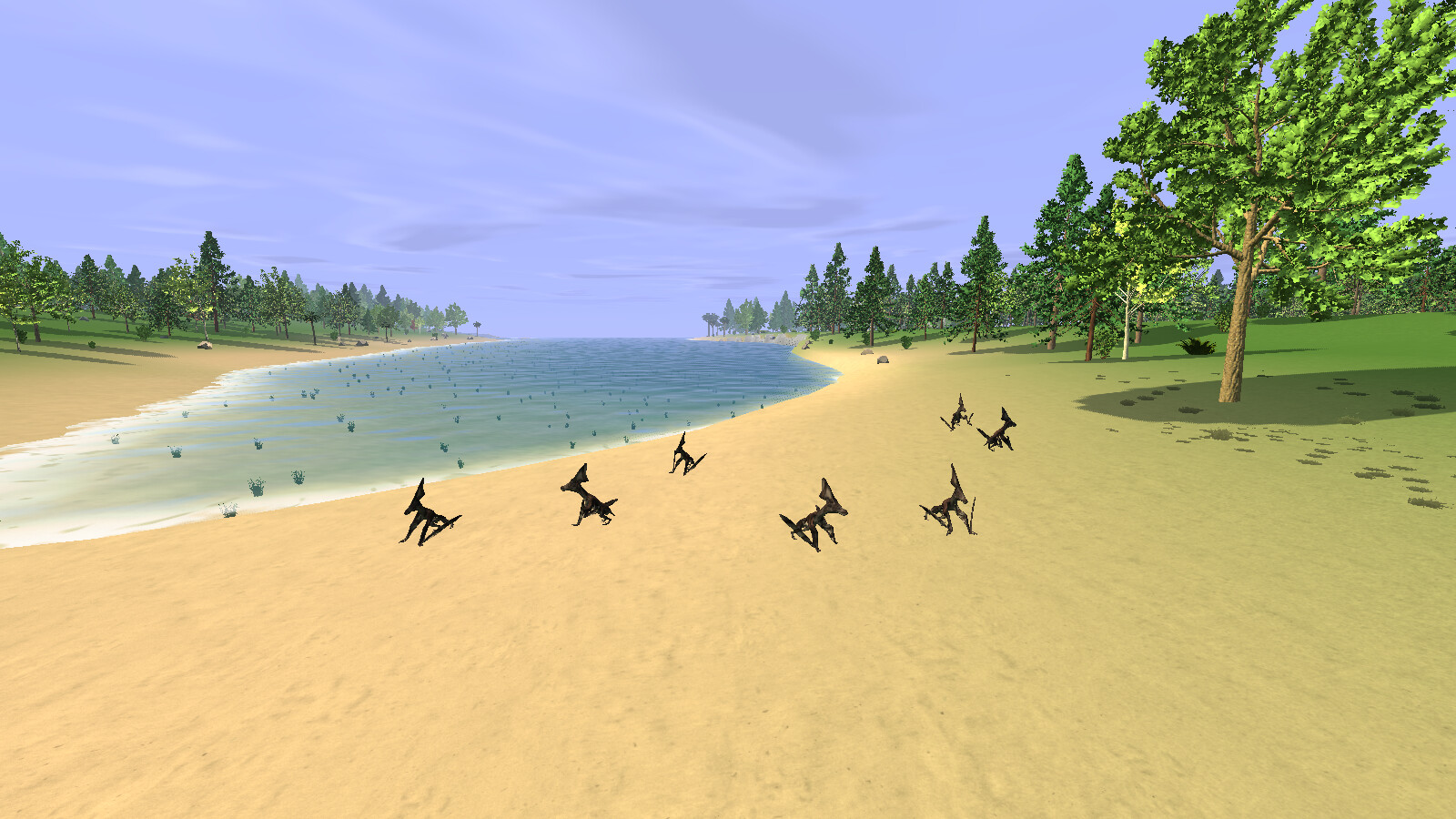
I scan the surroundings better now, and so I can show how small pterosaurs really live: together, in colonies. On a shore I can make out a Tapejara colony of five to eight. Whoever strikes one animal meets the colony: the others in sight answer, and a colony of eight fights where a lone animal runs. The scan also finds the Deinosuchus: it keeps near rivers and lakes and in swamps, and it rests in the river water.
Finding creatures
The inventory has a tab for creatures. Choose a kind in the box, type a name beside it, and the list shows your tamed creatures, your tribe and your allies. Select a row to mark the creature or the player on the compass. A saved group can be dragged onto a hotbar slot.
A coast to land on
A BAGDEV now arrives on the coast. The shore is the gentlest, safest place of a land-strip; the danger rises as it works inland, and the stronger creatures live away from the water. The landing lies near the water by design.
The sea floor
My scan reaches the sea floor more closely now, and I can show the garden that grows there. Kelp stands 9 m tall and grows between 10 and 45 m deep. Seagrass stays at 0.9 m. Both stand much denser: on a measured strip of 4 by 4 km seagrass rose from 8 997 to 16 791 plants and kelp from 8 625 to 23 266.
A steadier picture
On a weak platform the picture runs more smoothly. Each grass tuft is drawn as one blade facing you, dark lamps cost nothing, the clouds read from one stored pattern, and the largest trees and the imported plants are drawn in coarser steps at a distance. I keep a reserve while the view moves, so the picture does not stall. Every quality setting is one slider now, and the options panel fits a narrow screen.